

Topic
Summary
In this lesson from ConnectED, students will learn why the West Bank barrier wall was created, its role in security and effects on Palestinian life, and the broader debates it sparks in the Israeli-Palestinian conflict.
** Note: this video and lesson were made prior to the October 7 attacks on Israel and the start of the Gaza War.
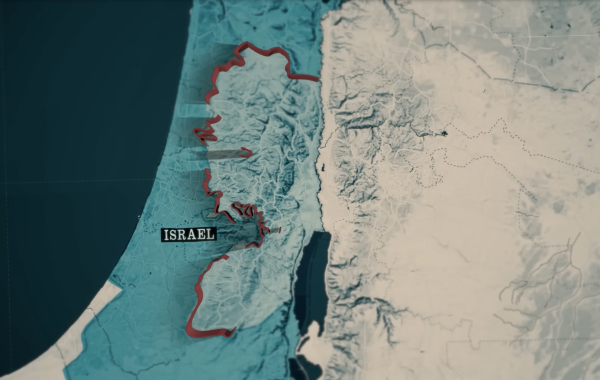
The barrier that separates the West Bank and western Israel is a contested issue from Israeli and Palestinian perspectives. Israelis consider it a security barrier and a necessary way to protect Israeli citizens while Palestinians call it the Apartheid Wall and a tool that enforces an unequal system and restricts Palestinian movement. This contested land is tied to both religions, and the wall also separates Israelis and Palestinians with fences, barbed wire, and cement barriers. In some cases, it separates Palestinian families from each other and from their places of employment, creating economic hardship. For many, it is a visual reminder of the ongoing failure of the peace process.
Beginning in the 1990s, peace talks and signing ceremonies took place but never resulted in actual peace. On and off for decades, political and military opposition on both sides has unfortunately led to murders, suicide bombings, and significant trauma. Debates over the role that the barrier has on security efforts have also fluctuated over time and mark the competing visions of this shared land. In addition, a central component of the Israeli-Palestinian conflict is the “land for peace” concept as complex arguments and historical influences have also been influential.
This resource will help your students gain a deep understanding of the West Bank barrier – its history, motivations, and consequences – as it examines different perspectives on its intent and impact. Through historical analysis, firsthand accounts, and key data, your students will develop a more nuanced understanding of the complex forces, including economic hardship, security concerns, political power struggles, and religious beliefs, that drive the conflict and policy decisions in the region. In this analysis, students will strengthen their ability to critically assess multiple viewpoints, understand the relationship between security and human rights, and reflect on the broader implications of walls and borders in conflict zones around the world.
The educator’s guide provides essential questions to consider at the beginning of the lesson. A 20-minute-long video, discussion questions, learning activities, and reflection questions are included. Review questions are also provided to promote and gauge deeper understanding.
Recommended Resources


