
Teaching About Antisemitism
What Educators Should Know When Teaching about Antisemitism
To teach about and address antisemitism, educators must understand not only what it looks like, but how it functions.

Antisemitism can arise in a history lesson, a discussion of current events, or a classroom conversation. It isn't confined to the curriculum. Concerns and questions about contemporary antisemitism and its impacts have increasingly become part of local, national, and global conversations in response to an eruption of violence against Jews and Jewish communities around the world. In 2025, the FBI recorded more than 1,500 anti-Jewish hate crime incidents in the United States, the third-highest year since it began tracking hate crimes in 1991. Yet even educators committed to addressing bias and hate may be unfamiliar with the ideas and patterns that make antisemitism distinct. Understanding those patterns helps teachers represent Jewish experiences accurately; support Jewish students and families; and equip all students to think critically, recognize misinformation, and disrupt harmful narratives. Answering the question, “what is antisemitism?” is the essential first step.
Classroom connection: For an intro activity, What is Antisemitism? (grades 6-12) uses Holocaust survivor testimony to explore the foundations of Judaism and the history of antisemitism.
Teaching the History and Origins of Antisemitism
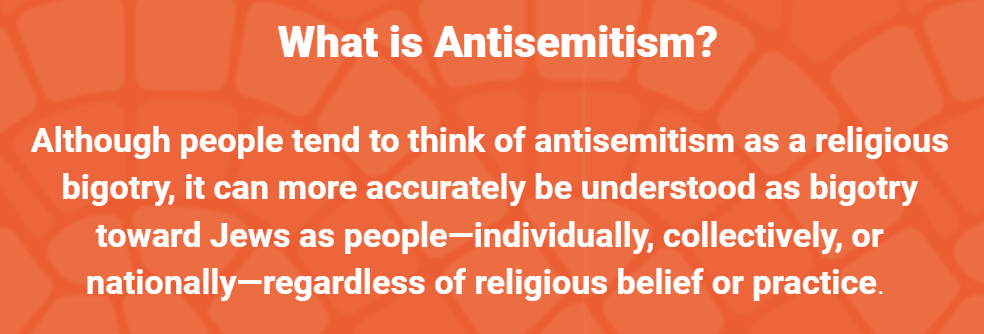
Antisemitism is not limited to hate.
Antisemitism is a systemic bias and a conspiratorial worldview that has been woven into the development of many societies over the past two millennia and has functioned as a consistently successful political tool for people and institutions seeking to gain or maintain power. Hitler and the Nazis, with their particular strand of antisemitic ideology, were far from the only ones to leverage this tool. Tracing the origin of antisemitism reveals how often this tool has been reused. Any community can be persuaded to coalesce around a common enemy and decide to solve their most pressing problems by defeating those they perceive as the cause of their problems. Too often throughout history, that common enemy has been the Jewish people, and the proposed solution has been to get rid of them.
Classroom connection: Teaching the History of European Antisemitism (grades 6-12) traces how antisemitism began and adapted over time, and To Bigotry No Sanction (grades 6-12) focuses on the history of antisemitism in the United States.
Helping Students Recognize How Antisemitism Works
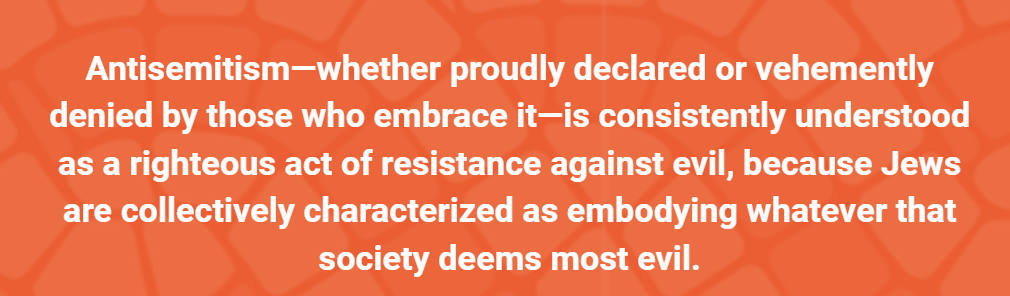
Demonizing Jews has consistently followed a remarkably simple formula: Jews are accused of destroying whatever a given society values most.
The specific accusations change based on what a particular society values most, but the fundamental claim remains constant. Recognizing this formula is key to understanding the roots of antisemitism. The Nazis valued racial purity; Jews were cast as an inferior race promoting miscegenation. Medieval Europeans valued Christianity; Jews were cast as Christ killers. Today's progressive activists value liberation for oppressed peoples; Jews are often cast as racist and oppressive white colonizers. When they are portrayed as actively harmful to the people and ideals one cares about deeply, opposition and violence toward Jews appears not only justified, but essential and righteous
Classroom connection: Classroom connection: The Whose Fault is Antisemitism? video and educator guide (grades 6-12) walks students through the history of antisemitism and ways to challenge it in their own communities.
Teaching Students to Recognize Antisemitic Tropes

Across the globe from the Middle Ages until today, antisemitic rhetoric and imagery have relied on several recurring stereotypes, myths, and conspiracy theories—collectively known as antisemitic tropes.
Understanding these patterns can help us recognize how antisemitism adapts over time while maintaining many underlying themes. False claims about Jewish greed, secret control of governments or media, disloyalty, and child murder have been tropes that have circulated for centuries. The roots of antisemitism run deep. These tropes may also account for antisemitism’s persistence and adaptability. New accusations rarely emerge from nothing; instead, they build upon familiar narratives that already exist in public consciousness. Because these ideas may feel familiar or intuitively “true” to people who have absorbed them culturally—even indirectly—new anti-Jewish ideas and claims are often easier to accept, spread, and normalize. Understanding these patterns helps students recognize antisemitism even when it is packaged as a joke, as political commentary, or as seemingly a plausible explanation for complex events.
Classroom connection: The Antisemitic Tropes and Their Origins video and educator guide (grades 6-12) helps students trace where antisemitic stereotypes began and how to recognize them today.
Teaching about Antisemitism Beyond the Holocaust
Teaching about Jews and the oppression and violence they have faced as a people must not be confined to the Holocaust. The Nazis' antisemitic propaganda and systematic murder of six million Jews is only truly understood when situated within the context of the much longer—and much more complex—history of the Jewish people and their endurance of antisemitism.
The roots of antisemitism stretch back millennia, long before the Nazi era, and exploring this history gives students essential context about the Jewish people. by learning about Jewish history, diversity, culture, and peoplehood, and not just only about the Jewish experience during the Holocaust, students gain a foundation to question the distorted images that antisemitism promotes. Paired with that knowledge, examining antisemitism offers meaningful opportunities to strengthen historical critical thinking and media literacy: What assumptions does a claim make? What evidence supports it? Who benefits from assigning blame? These habits help students understand antisemitism while building their capacity to recognize manipulation and engage thoughtfully with a complex world. Understanding how susceptible whole societies have been to the idea that Jews are the single greatest threat to their ideals—and learning to recognize it in our world today—prepares students to become critical thinkers and more informed consumers of media so they can disrupt the pattern of demonization and violence.
Classroom connection: In Why Didn't Antisemitism End After the Holocaust? (grades 6-12), students use survivor testimony and expert insight to connect antisemitism's historical roots to how it appears today.
Antisemitism Lesson Plans


Videos on Antisemitism


Books about Antisemitism


Teaching about Antisemitism in your K–12 Classroom
Our team is here to make learning about antisemitism accessible and easier to bring into your classroom. This overview provides a starting point for understanding antisemitism’s enduring patterns and contemporary forms. The featured resources below offer pathways for deepening your own knowledge and supporting thoughtful, age-appropriate learning in K-12 settings. Whether you’re building an antisemitism lesson plan from scratch or helping students explore the question, “what is antisemitism?”, you do not need to be an expert to begin. With a strong foundation and carefully selected resources, you can help students recognize antisemitism, approach Jewish experiences with curiosity and care, and contribute to a school community that honors the dignity of difference.